Welcome to the fifth edition of the CheMatSustain Newsletter
|
|
|---|
|
| |
Welcome to the latest updates from CheMatSustain, where we are committed to shaping a sustainable future and aligning with the principles of the Safe and Sustainable by Design framework.
Our mission is clear: to lead the way in pioneering innovative methods for safety and sustainability assessments of chemicals and materials, particularly at the nano-scale, across the European Union. |
|
|
|
|
|
This issue
1. Unveiling Quantum Effects in Nanomaterials through Advanced Photoelectron Spectroscopy
Lucrezia Aversa and Roberto Verucchi, Institute of Materials for Electronics and Magnetism, IMEM-CNR and Maria Cristina Albertini, Università degli Studi di Urbino Carlo Bo
2.When Size Changes the Rules: Revealing Quantum Effects in Nanomaterials
Bartłomiej Gostyński, Technical University of Lodz
3. Predicting how Safe a Material is Before You Make It
Rafael García Meseguer, PQSAR
4. Nanomaterials in the Spotlight: Our Video Series on CMS Methodology
Patrycja Karwasiecka, Hamburg University of Applied Sciences
Spotlight Partnership
Insightful articles from the Collab4Resilience members
Introducing SiToLub: Safe and Sustainable Lubricant Innovation
Sara Canedo and Sofiya Savova, F6S, SiToLub Project
MACRAMÉ: Advancing characterisation methodologies towards safe and sustainable advanced materials
Steffi Friedrichs & Anna Pohl, AcumenIST, Horizon Europe Project MACRAMÉ
The SSbD4CheM Knowledge Sharing Platform: Turning Safe and Sustainable by Design into Practice
Beatriz Alfaro Serrano, BNN, SSbD4CheM
Strengthening SSbD Skills with the PLANETS Educational Kit – We Need Your Input!
Beatriz Alfaro Serrano, BNN, SSbD4CheM
Event Announcements |
|
|---|
|
|
1. Unveiling Quantum Effects in Nanomaterials through Advanced Photoelectron Spectroscopy
Lucrezia Aversa and Roberto Verucchi, Institute of Materials for Electronics and Magnetism, IMEM-CNR and Maria Cristina Albertini, Università degli Studi di Urbino Carlo Bo
|
|
|---|
|
Experimental activities within WP4 of the CheMatSustain project continue to advance our understanding of quantum phenomena in nanomaterials by developing robust characterization methodologies. IMEM-CNR (FBK-Trento Unit, Italy), as subcontractor of the UniUrb Team, in close contact to the WP4 leader, has developed a methodology and specific protocols.
XPS (X-Ray Photoelectron Spectroscopy) and UPS (Ultraviolet Photoelectron Spectroscopy) are surface characterization techniques based on the analysis of the Kinetic Energy of electrons emitted from deep (core levels) or shallow (valence band) energy levels after irradiation with an X-ray or UV source.
In particular:
- XPS enables the study of core-level binding energies and surface chemical states.
- UPS provides information on valence band structure and electronic states near the Fermi level.
Recent activities have focused on investigating quantum effects in metallic nanoparticles using these surface photoelectron spectroscopy techniques, with particular emphasis on gold nanoparticles (AuNPs). Quantum confinement can significantly influence physical properties, making size-dependent characterization essential for the design of advanced functional nanomaterials. When a particle becomes sufficiently small and reaches the nanometric range, its electronic properties deviate from those of bulk materials and can be detected and described by surface electronic spectroscopies.
|
|
|---|
|
Fig.1. Energy shift for nanomaterials. |
|
|---|
|
We employed XPS and UPS to explore how reducing particle dimensions to the nanometer scale modifies electronic properties via quantum confinement. These studies provide valuable experimental evidence supporting the role of nanoparticle size in determining electronic structure and surface chemistry. In particular, shifts in the energy position of deep or shallow peaks/structures, defined as the binding energy (BE), identify the occurrence of quantum confinement effects when they move towards higher BE.
High-resolution XPS/UPS measurements were performed using an ultra-high-vacuum multi-probe spectroscopy system operating at IMEM-CNR laboratories in Trento (IMEM-CNR website).
The analysis workflow included:
- Long-range spectral acquisition to identify chemical species present on the surface and valence band features.
- High-resolution core-level measurements; high-resolution analysis of external energy bands to determine the Work function (WF) and valence band properties.
- Advanced line-shape fitting and deconvolution using Voigt functions.
- Identification of specific descriptors (energy positions, presence of features related to specific functional/chemical groups, work functions).
Particular effort was devoted to distinguishing true quantum effects from possible chemical shifts arising from interactions between nanoparticles and stabilizing ligands.
Encouragingly, we detected no evidence of strong Au–ligand chemical bonding, supporting the conclusion that observed binding-energy changes are genuine manifestations of quantum confinement.
The successful observation of quantum confinement effects in gold nanoparticles validates the experimental protocols developed within CheMatSustain. It demonstrates the potential of photoelectron spectroscopy as a powerful tool for nanoscale materials research. Moreover, we used the same XPS/UPS data to build a database of all the materials involved in the project, opening the possibility to merge the descriptors identified by the photoelectron spectroscopy-based methodology with those from other characterization techniques as well as from the biological methodologies (in-vitro microfluidic and in-vivo models and proteomics and transcriptomics methods). Identification of nanoparticles with specific descriptors helps define material groups and, in turn, recognize potentially hazardous materials in unknown samples.
Finally, by combining rigorous experimental methodologies and high-quality spectroscopic measurements with emerging AI-assisted analysis approaches, a strong foundation for the characterization and design of next-generation nanomaterials is established.
The methodologies described here have been reported in two deliverables (4.2 and 4.3): “Blueprint on the experimental manifestation of quantum effects in nanoscale – XPS analysis” and “Blueprint on the experimental manifestation of quantum effects in nanoscale – UPS analysis”. They will be publicly available by early 2027.
|
|
|---|
|
2. When Size Changes the Rules: Revealing Quantum Effects in Nanomaterials
Bartłomiej Gostyński, Technical University of Lodz
|
|
|---|
|
|
Materials can behave very differently when they are reduced to only a few atoms or nanometres in size. At this scale, the familiar rules used to describe bulk materials are no longer always sufficient. Electrons are confined to a small space, atomic sites become less uniform, and the way a material responds to an external disturbance can change. These are quantum effects, and understanding them is essential if nanomaterials are to be characterised, compared and designed reliably.
Within CheMatSustain, a computational study was carried out to demonstrate how such effects influence properties that can be measured experimentally. The work focused on small clusters of gold and titanium dioxide, two very different classes of nanomaterials. Gold clusters represent metallic systems in which electrons can become increasingly delocalised as the particle grows. Titanium dioxide clusters, by contrast, represent oxide materials in which local bonding and the arrangement of titanium and oxygen atoms play a particularly important role.
The study used quantum-mechanical computer simulations to calculate core-electron binding energies. A core electron is an electron located close to an atomic nucleus. The energy required to remove it depends not only on the chemical element, but also on the atom’s local surroundings. This makes core-electron binding energies useful chemical fingerprints. They are directly related to X-ray photoelectron spectroscopy, or XPS, an experimental technique widely used to identify elements, oxidation states and chemical environments at material surfaces.
|
|
|---|
|
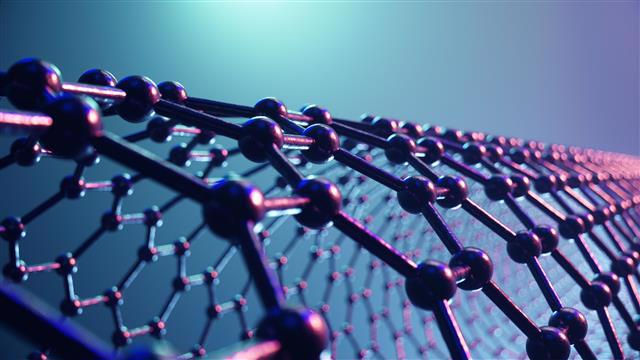
Fig.2. On a sub-atomic level, quantum effects change how materials behave. |
|
|---|
|
The calculations followed what happens when an X-ray removes a core electron from a selected atom. The remaining electrons reorganise to screen the resulting positive charge. This relaxation process is fully quantum mechanical and cannot be described reliably by considering only classical electrostatic forces. By calculating the response for different atoms, cluster sizes and structures, the work connected local atomic geometry with the signals expected in an XPS experiment.
The results showed that “smaller” does not have one universal meaning. In the gold clusters, the calculated XPS-related energies changed systematically as the clusters became larger, reflecting the gradual development of more efficient metallic screening and more bulk-like electronic behaviour. In the titanium dioxide clusters, the average energy changed much less across the studied sizes. Instead, differences between individual atomic sites became especially important. The exact arrangement of neighbouring oxygen atoms and the wider titanium-oxygen network could influence the response more strongly than cluster size alone.
This distinction matters because experimental spectra from nanomaterials often contain overlapping or broadened signals. A broad peak may not simply indicate experimental noise. It can also reflect the presence of many atoms that belong to the same element but experience slightly different local environments. The simulations help reveal this hidden site-to-site variation and show how it may appear as broadening, asymmetry, shoulders or multiple features in a model spectrum.
The immediate value for CheMatSustain is methodological. The work provides a tested workflow for linking nanoscale structure, electron relaxation and an experimentally relevant descriptor. It can support the interpretation of characterisation data and help identify which structural features should be considered when comparing chemical or nanomaterial forms. This is relevant to Safe and Sustainable by Design approaches because reliable assessment depends on knowing which material features are responsible for a measured property. Quantum-mechanical calculations can therefore complement experiments, reduce ambiguity and help prioritise the most informative measurements.
The results also create a basis for future developments. The same approach can be extended to larger nanoparticles, surfaces, defects, coatings and interfaces. The calculated electronic-response patterns may also be used as physically meaningful descriptors in data-driven or machine-learning models. Such models could eventually screen larger libraries of candidate nanostructures more rapidly, while detailed quantum calculations would remain available for validation and difficult cases.
Beyond CheMatSustain, this type of modelling could be useful wherever nanoscale structure affects surface chemistry: for example in catalysts, energy materials, electronic devices, protective coatings and biomedical nanomaterials. Upscaling does not simply mean applying the same calculation to an industrial-sized particle. Rather, it means using insights from carefully selected nanoscale models to build transferable rules, databases and faster prediction tools. In this way, quantum calculations performed on small representative systems can contribute to decisions about much larger and more complex materials.
The key message is simple: at the nanoscale, the position and environment of each atom can matter. By making these effects visible and connecting them with measurable XPS signals, the CheMatSustain work helps turn quantum behaviour from an abstract concept into practical information for material characterisation and future design.
|
|
|---|
|
3. Predicting how Safe a Material is Before You Make It -
A Scheme of in silico Models for the Chemicals that Make Up Advanced Nanomaterials
Rafael García Meseguer, PQSAR
|
|
|---|
|
Advanced materials, especially at the nanoscale, appear in batteries, coatings, medicines and dozens of everyday products. They raise a hard question: how do you know a new material is safe when it doesn’t exist yet, or exists only as a few milligrams in a lab?
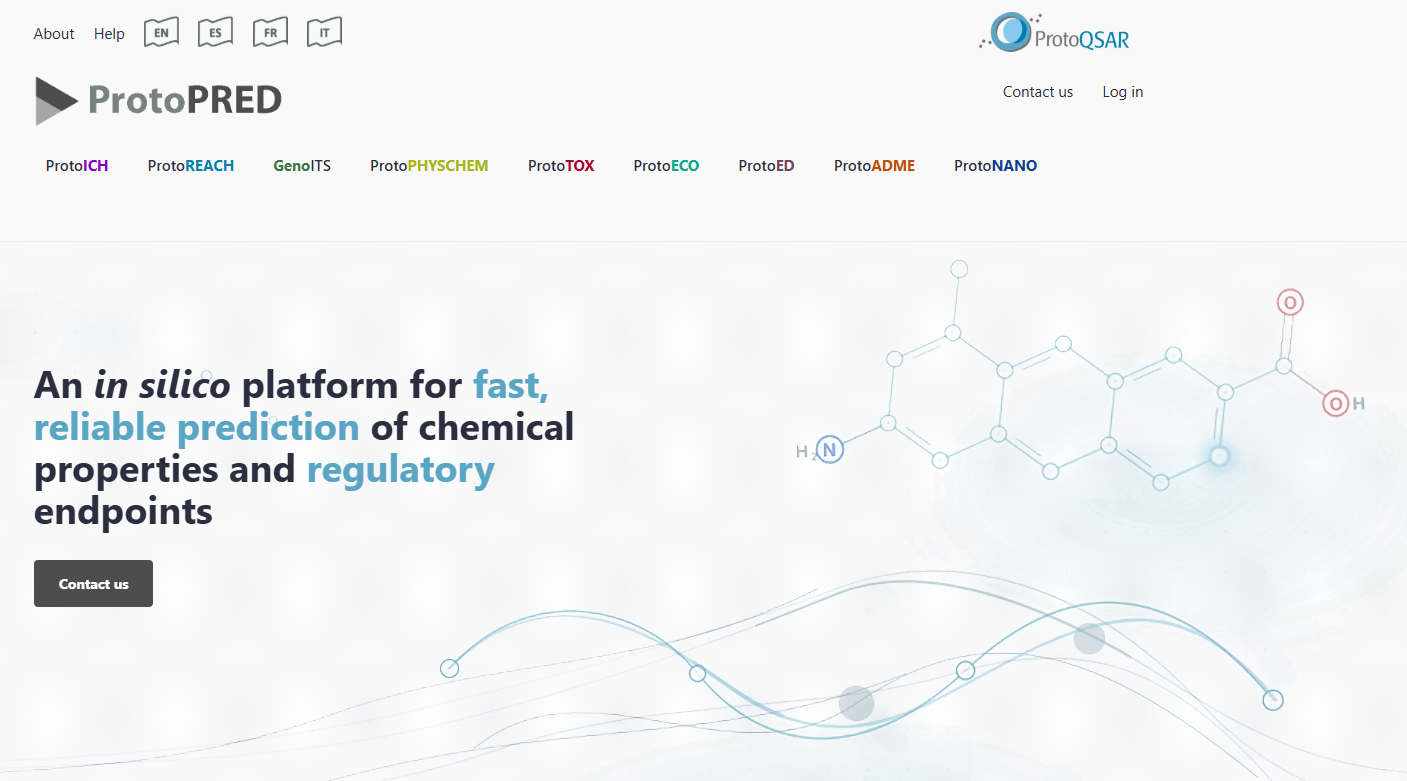
Testing every candidate on the bench is slow and costly, burning through time, money, and animals. In CheMatSustain, ProtoQSAR predicts a material’s hazards from its chemical structure using Quantitative Structure-Activity Relationships (QSAR). QSAR models use patterns in chemical structures to predict how substances might behave by linking a molecule’s features to a measured property. We have set out the scheme behind those models and already put the first set to work. In practice, an industry partner can input the molecular structures of their candidate materials into ProtoPRED®, ProtoQSAR’s online prediction platform, run the models, and quickly receive predictions for each substance, helping them decide which materials to advance to experimental testing.
|
|
|---|
|
Fig.3.
ProtoPRED®, ProtoQSAR’s online in silico platform for predicting chemical properties and regulatory endpoints. |
|
|---|
|
The catch with nanomaterials
QSAR was built for molecules. Give it a well-defined chemical structure, and it can estimate a property. A nanomaterial rarely offers that. The same composition can appear in different sizes, shapes, and crystal forms, with varying surface coatings and varying degrees of clumping. This diversity means standard models often cannot capture or predict how nanomaterials will behave, because their wide-ranging forms extend beyond a single, well-defined structure. Two samples that share a formula can behave nothing alike, and that variety doesn’t fit neatly into one structure.
The field has adapted; new models for nanomaterials have been developed, using nanodescriptors rather than just plain chemical structures. Nanodescriptors are measurable features like size, surface charge, or coating thickness that help describe nanoparticles in more detail. However, these models face key limitations. There is still a shortage of standardised experimental data on nanomaterials, which restricts the size and diversity of the training sets and can undermine model reliability. In addition, there is no consensus set of descriptors that can be applied consistently across different types of nanomaterials, making it difficult to compare results or transfer models between material classes. Together, these challenges mean that there are fewer predictive models, and the ones that exist may be less reliable and less general than those for traditional chemicals, highlighting the need for more data and clearer descriptor standards to advance the field.
However, a nanomaterial is more than its core. It is also made of ligands, the molecules that coat the particle, and dopants, atoms or small molecules added to tune its behaviour. These components are well-defined molecules, exactly what QSAR needs. So, while we are developing nano-QSAR models, we have started with them, where the chemistry is clearest. Predicting the hazard of these building blocks gives an early, structure-based read on the material as a whole.
What we built
We developed a set of QSAR models for the human vascular system, the cells that line our blood vessels, because that is a main route by which nanomaterials and their chemicals reach the body. The scheme covers the health endpoints that matter most for these exposures:
- Cytotoxicity: whether a chemical kills cells.
- Apoptosis: whether it triggers programmed cell death.
- Genotoxicity: whether it damages DNA.
- Oxidative stress: the reactive oxygen species (ROS) it can produce.
- Inflammation: whether it sets off an inflammatory response.
A parallel line of ecotoxicity models examines environmental effects to assess the effect of these molecules when released into the environment.
We drew the training data from public toxicity databases and the scientific literature, and documented every model to the OECD reporting standard, QMRF, each having a defined chemical space or applicability domain, meaning the types of chemicals for which the model’s predictions can be trusted.
Why it matters
Within CheMatSustain, these models will plug into an online computational platform under development and the project database, and will be validated and refined as experimental data arrive. The approach applies to any advanced material whose components can be represented as molecules and aligns with Safe and Sustainable by Design and the EU Chemicals Strategy, so the same models can support regulatory screening well beyond this project.
For industry, the scheme is an early filter. Screen the chemistry of many candidate materials on a laptop, drop the ones that look hazardous, and send only the promising few to the lab. Catching problems at the drawing-board stage, before production, is cheaper and faster than fixing them later. For consumers and the environment, it implies safer materials reaching the market and fewer animal tests along the way.
|
|
|---|
|
4. Nanomaterials in the Spotlight: Our Video Series on CMS Methodology
Patrycja Karwasiecka, Hamburg University of Applied Sciences
|
|
|---|
|
CheMatSustain recently released the fifth, sixth and seventh project video, each one with a different focus from the project’s content. The video:
,,In-silico methods: What are they and how are they used’’ deals with the topic of in-silico models for prediction of characteristics and risks of chemicals and nanomaterials. It also provides insights into how in-silico models can be used to speed up the innovation process and what common barriers of implementation need to be tackled.
In the video
: ,,Risk and Life Cycle Assessment: What you need to know’’, we explore how both risk and life cycle assessments can be applied combined with the Safe and Sustainable by Design (SSbD) framework to ensure informed policy making. The assessments are crucial steps in complying with safety and sustainability regulations, yet they often leave essential gaps if applied separately. Through reducing uncertainty and improving consistency across assessment methods, CheMatSustain supports evidence-based policy recommendations.
Our most recent video,
,,Seeing beyond the surface: Ultraviolet and X-Ray Photoelectron Spectroscopy’’, features the X-Ray Photoelectron Spectroscopy (XPS) and Ultraviolet Photoelectron Spectroscopy (UPS) techniques that are applied in the project to generate chemical and electronic data regarding the surface properties of advanced materials.
These and other project videos can be found on the CheMatSustain YouTube channel: https://www.youtube.com/@chematsustain.
|
|
|---|
|
|
5. Collab4Resilience Spotlight Partnership
Jasmin Röseler, Hamburg University of Applied Sciences
|
|
|---|
|
CheMatSustain established the Collab4Resilience Network, an open communication working group. The network connects projects funded under the HORIZON-CL4-2023-RESILIENCE-01 and related calls to support our scientific communication efforts.
One of the key outcomes of the Collab4Resilience initiative is fostering collaboration through project newsletters.
In this issue, we’re excited to share updates from some of the Network members, highlighting their work towards our shared goals. |
|
|---|
|
Introducing SiToLub: Safe and Sustainable Lubricant Innovation
Sara Canedo and Sofiya Savova, F6S
|
|
|---|
|
The modern lubricants industry is at a turning point, facing pressures from stringent environmental regulations and fragile global supply chains. Traditional, trial-and-error laboratory formulations are no longer efficient enough to keep pace.
Enter SiToLub, a pioneering project dedicated to developing a cutting-edge digital framework for lubricant innovation. By integrating material characterization, multiscale simulation, and AI-driven data analytics, SiToLub is transforming how lubricants are engineered. The project champions the European Commission’s Safe and Sustainable by Design (SSbD) framework, ensuring safety, environmental impact, and technical functionality are evaluated from the very beginning of the design process. Through sophisticated predictive models and rigorous validation on the i-TRIBOMAT test bed, SiToLub empowers the industry to transition toward resource-efficient, bio-based alternatives without sacrificing mechanical performance.
Tune In: The "Drop the Knowledge" Podcast
Want to go behind the scenes of sustainable tribology? Join host Daniela Fonseca on the Drop the Knowledge Podcast as she interviews the leading minds driving SiToLub.
Listen on our Podcast Page
|
|
|---|
|
Project highlights:
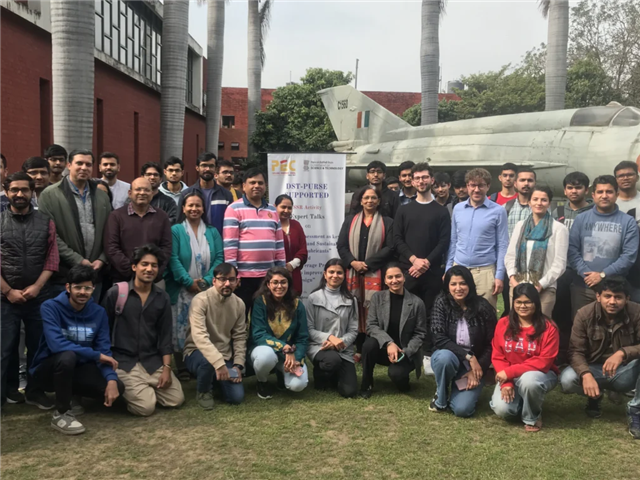
Bridging borders in India: Consortium members visited Punjab Engineering College to discuss global sustainability. The event highlighted how European SSbD frameworks and openLCA modeling can be adapted to drive impactful, cross-border innovation.
Networking Horizon Europe Projects in Brussels: SiToLub took center stage at a European Commission DG RTD event. Our team presented our roadmap for integrating SSbD criteria early in the design phase, fostering vital synergies with sister initiatives
|
|
|
|
|
MACRAMÉ: Advancing Characterisation Methodologies Towards Safe and Sustainable Advanced Materials
Steffi Friedrichs and Anna Pohl, AcumenIST
|
|
|---|
|
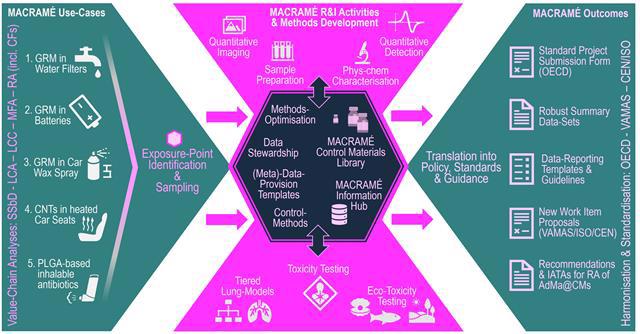
Advanced materials exhibit exceptional properties that surpass those of traditional materials: they can be lighter yet stronger, more durable, responsive to environmental changes, and easier to recycle. For Europe, they are essential to building a greener, more digital, and competitive economy. Advanced materials already enable innovations. As their use continues to expand, there is an urgent need for advanced characterisation methodologies to assess and predict potential health and environmental risks throughout their life cycle.
The MACRAMÉ Project (Horizon Europe, GA 101092686) contributed to ensuring that advanced materials are not only effective but also safe and sustainable. Over the past 3.5 years, MACRAMÉ developed, demonstrated, and validated methodologies for the identification, physicochemical characterisation, and quantification of inhalable carbon-based advanced materials, as well as for assessing and predicting their potential risks.
MACRAMÉ focused on five real-world industrial use cases: battery management systems, car seats, inhalable drug delivery, lubricant sprays, and water filters. These applications incorporate inhalable carbon-based materials such as graphene-related materials, carbon nanofibres and nanotubes, and poly lactic-co-glycolic acid nanoparticles. The project addressed the full life cycle of these products, from design and production to use and end-of-life.
MACRAMÉ delivered practical tools, testing methodologies, and predictive models, along with recommendations supporting international standards and OECD Test Guidelines. All results were integrated into the MACRAMÉ Information Hub, enabling reliable knowledge exchange among researchers, regulators, and industry, and supporting regulatory acceptance of methodologies.
Building on over 15 years of nanosafety research, MACRAMÉ collaborated with projects and initiatives such as the Malta Initiative and the Graphene Flagship and aligned with key EU strategies including the Chemical Strategy for Sustainability, the European Green Deal, the JRC SSbD Framework and the upcoming Advanced Materials Act, to proactively support with the MACRAMÉ results and key outcomes the EU in becoming leader in clean technologies and sustainable products.
|
|
|---|
|
The MACRAMÉ R&I Approach. |
|
|---|
|
|
The SSbD4CheM Knowledge Sharing Platform: Turning Safe and Sustainable by Design into Practice
Beatriz Alfaro Serrano, BNN
|
|
|---|
|
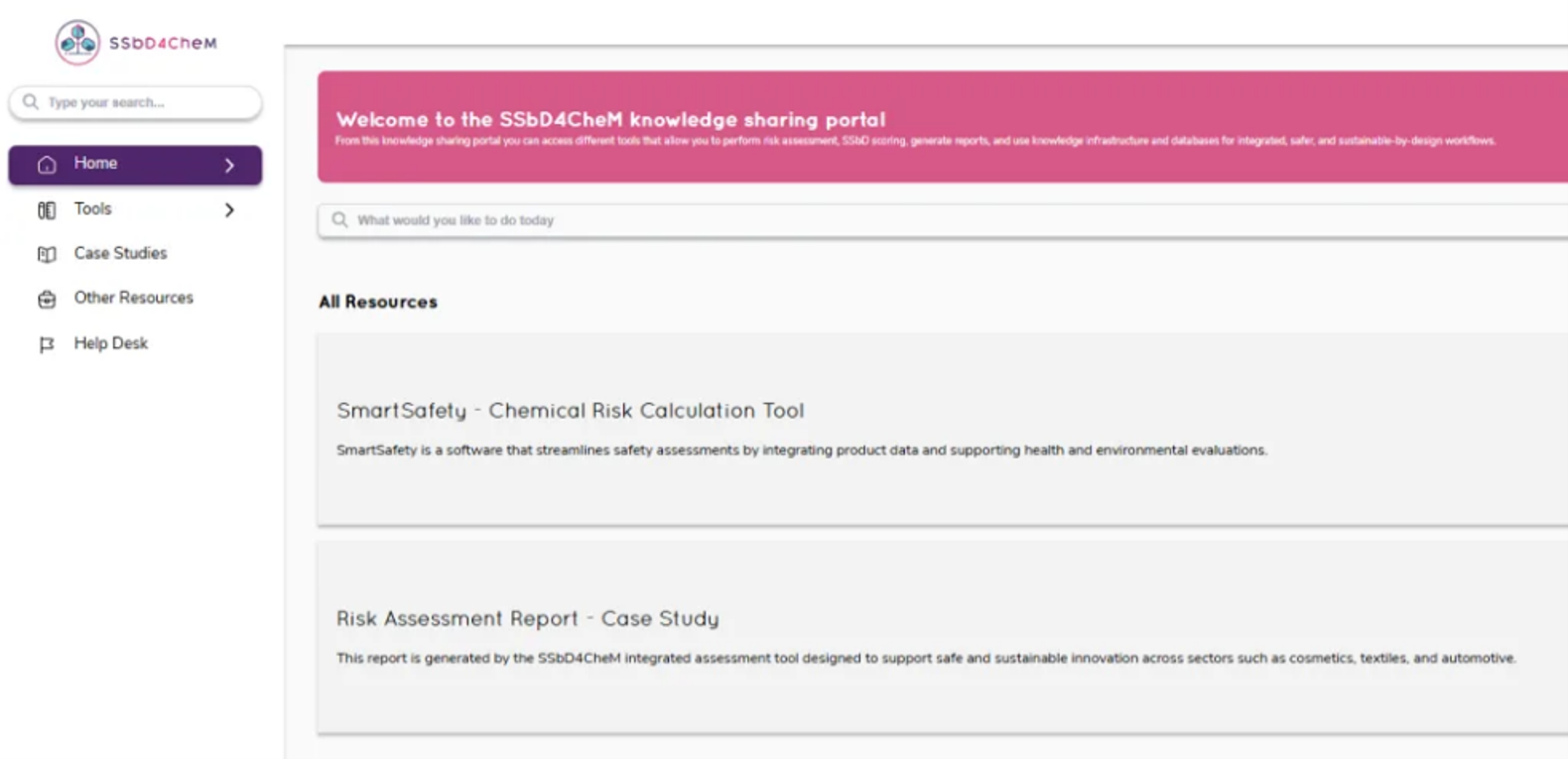
Developing safer and more sustainable chemicals and materials requires accessible knowledge, practical tools, and collaboration across disciplines. This is the focus of the EU-funded SSbD4CheM project, which has developed the SSbD4CheM Knowledge Sharing Platform, a centralized, web-based resource designed to support the implementation of the Safe and Sustainable by Design (SSbD) framework for chemicals and advanced materials (AdMa), as elaborated by the EC JRC.
The platform brings together tools, data resources, methodologies, guidance, and training materials in one place, making it easier for researchers, industry, policymakers, and other stakeholders to integrate safety and sustainability considerations throughout the innovation process. Users can access structured workflows that support hazard screening, sustainability evaluation, life-cycle thinking, and transparent documentation of design decisions.
More than a collection of digital tools, the Knowledge Sharing Platform also serves as a learning hub. It provides guidance documents, explanatory resources, and training materials covering SSbD concepts, methodologies, and regulatory contexts, helping build capacity across sectors. Developed in line with FAIR principles (Findable, Accessible, Interoperable, Reusable), the platform ensures that data and resources can be easily discovered, reused, and integrated into other tools and innovation activities.
The platform currently offers a wide range of resources, including the Risk Assessment Report – Case Study, SmartSafety, ASPA-assist, ToxTemp, ACCORDs KI, the SDS collector/extractor, PubMed ChemInsight, PubChemPal, ECHA databases and notebooks, protocols and data guidance areas, and the SSbD4CheM Protocol Database.
Designed as a collaborative space, the SSbD4CheM Knowledge Sharing Platform connects knowledge, tools, and stakeholders to support the practical application of SSbD principles. By fostering collaboration between scientists, innovators, regulators, and sustainability experts, it helps translate policy ambitions into science-based practice and supports the development of chemicals and materials that are safe and sustainable by design.
Explore now the SSbD4CheM Knowledge Sharing Platform here.
|
|
|---|
|
Strengthening SSbD Skills with the PLANETS Educational Kit - We Need Your Input!
Beatriz Alfaro Serrano, BNN
|
|
|---|
|
Building the transition towards Safe and Sustainable by Design (SSbD) requires more than innovative methods and tools. It also depends on a shared understanding of concepts, terminology, and assessment approaches across disciplines. To support this, the EU funded project PLANETS has developed a growing Educational Kit designed to strengthen SSbD knowledge and skills among researchers, innovators, students, and practitioners.
The Educational Kit includes a range of freely available training materials covering topics such as SSbD scoping, Tier 1 and Tier 2 assessments, QSAR modelling, FAIR data and Digital Product Passports (DPP), as well as environmental, social, and economic Life Cycle Sustainability Assessment (LCA). Whether you are new to SSbD or looking to deepen your expertise, these resources provide practical guidance to support implementation.
A key component of the Educational Kit is the PLANETS SSbD Wordbook, developed to facilitate a common understanding of SSbD terminology across different scientific disciplines. Originally created to support collaboration within the project and its case studies, the Wordbook has since attracted interest from the wider SSbD community. As SSbD terminology continues to evolve, the Wordbook is intended to evolve with it. This is where you come in! A Delphi consultation is ongoing right now to gather expert feedback on the relevance, clarity, and completeness of the current terms and definitions. Your contribution will help improve and harmonise this community resource, supporting better communication, collaboration, training, and implementation of SSbD across Europe.
Explore now the PLANETS training materials and give your input to the SSbD Wordbook. We need your expertise!
|
|
|---|
|
In 2026, the CheMatSustain project will be back with new and exciting project outcomes, joining various events and conferences to showcase our work and to connect with stakeholders and other experts in the field of (nano)materials and chemicals. To always stay up-to-date on any upcoming outputs and opportunities to connect, follow us on LinkedIn.
Build Back Safe - Sustainable & Circular: Bio-based Materials Revolution
Baltic University Programme Workshop
1st October 2026, 14:00 (CET)
More information on our website
Teach In Day 2026
Session on SSbD materials
2nd December 2026
More information to follow
Events from our Bio4Circularity Members:
Workshop "How Coatings Support Circularity of Materials"
Hotel Van der Valk in Mons, Belgium
13th October 2026
More information and registration
|
|
|---|
|
Thank you for reading!
We hope that you have enjoyed the fifth edition of the newsletters and that you follow our project journey!
If you have not already, please subscribe to our newsletter!
|
|
|---|
|
Take a look at our upcoming events on our website!
|
|
|---|
|
Sincerely yours,
The CheMatSustain Partners
|
|
|---|
|
| |
|
|
|