Welcome to the fourth edition of the CheMatSustain Newsletter
|
|
|---|
|
| |
Welcome to the latest updates from CheMatSustain, where we are committed to shaping a sustainable future and aligning with the principles of the Safe and Sustainable by Design framework.
Our mission is clear: to lead the way in pioneering innovative methods for safety and sustainability assessments of chemicals and materials, particularly at the nano-scale, across the European Union. |
|
|
|
|
|
This issue
1. Reflection on 2025: A Year of Progress and Growing Impact
Andrea Dobri, Hamburg University of Applied Sciences
2. Consortium Met for the 4th General Assembly Meeting
Jasmin Röseler, Hamburg University of Applied Sciences
3. How Small Polystyrene Beads Help Us Understand Nano- and Micro-Plastics
Katarzyna Ranoszek-Soliwoda and Jaroslaw Grobelny, University of Lodz
4. When Cells Sense Danger: Apoptosis, DNA Damage and the Will to Divide
Małgorzata Siatkowska, Piotr Komorowski, Bogdan Walkowiak, Technical University of Lodz
5. The CheMatSustain Database: A Digital Driver of Sustainable Materials Research
Kamal Khandelwal, Eurskem B.V.
6. Designing Safer Nanomaterials with the Power of Digital Prediction
Rafael García Meseguer, Enrique Llobet Serra and Ana Ambit Álvarez, PQSAR
7. Collab4Resilience Brings EU Projects Together for a Fresh Round of Ideas
Andrea Dobri, Hamburg University of Applied Sciences
8. Spotlight Partnership
Insightful articles from the Collab4Resilience members
9. Event Announcement: CheMatSustain at ANTHOS'26 |
|
|---|
|
|
1. Reflection on 2025: A Year of Progress and Growing Impact
Andrea Dobri, Hamburg University of Applied Sciences
|
|
|---|
|
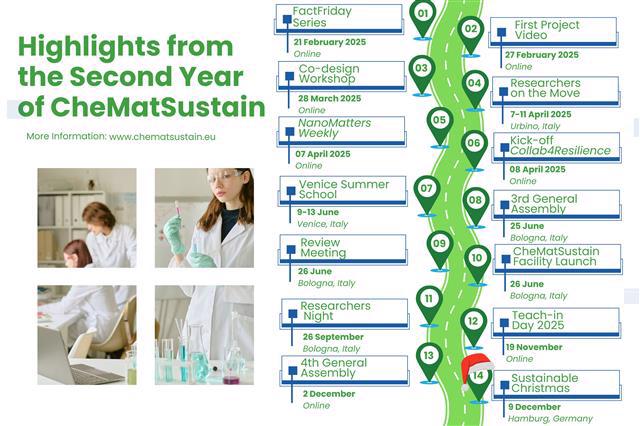
The past year has been a defining one for CheMatSustain (CMS), marked by stronger communication, steady scientific progress, and deeper engagement with stakeholders. CMS began by building a solid visibility plan. The launch of the Fact Friday series and the project’s first video set the tone for clear, accessible communication about nanomaterials. Soon after, the NanoMatters weekly update stream broadened this outreach even further.
A major milestone followed in March with the co-design workshop for the CheMatSustain Facility. Bringing together 35 participants from research, industry, and policy, the session provided essential guidance on data needs, transparency, and decision-support features, reinforcing that the Facility is being shaped with its users, not just for them.
Scientific collaboration also accelerated. A research exchange between Lodz University of Technology (TUL) and Università degli studi di Urbino Carlo Bo (UNIURB) strengthened work on microfluidic testing and led to new academic links, including an Erasmus+ agreement and technical seminars. |
|
|---|
|
Fig.1. Achievements of the CheMatSustain project in 2025. |
|
|---|
|
The project also took a leadership role beyond its own project. The kick-off of Collab4Resilience, coordinated by CMS, brought multiple EU projects together to align communication efforts and amplify shared messages on the Safe and Sustainable by Design Framework.
In June, CMS gathered expert feedback during the Venice Training School, held its 3rd General Assembly and first Review Meeting, and celebrated a major achievement: the public launch of the CheMatSustain Facility, now serving as an open hub connecting researchers, industry, policymakers, and citizens.
Throughout the autumn, CMS remained active in public engagement, including the European Researchers’ Night and a children’s Sustainable Christmas workshop. The year closed with the 4th General Assembly, held online, meeting and planning for the next phase of work.
Together, these achievements show a project gaining coherence, visibility, and influence—advancing scientific understanding while building the foundations for more transparent, collaborative, and sustainable approaches to nanomaterials. |
|
|---|
|
2. Consortium Met for the 4th General Assembly Meeting
Jasmin Röseler, Hamburg University of Applied Sciences
|
|
|---|
|
|
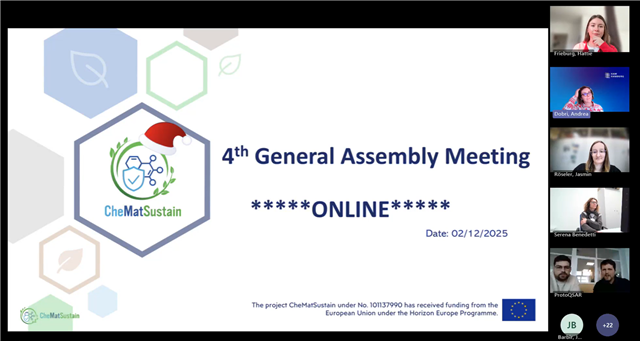
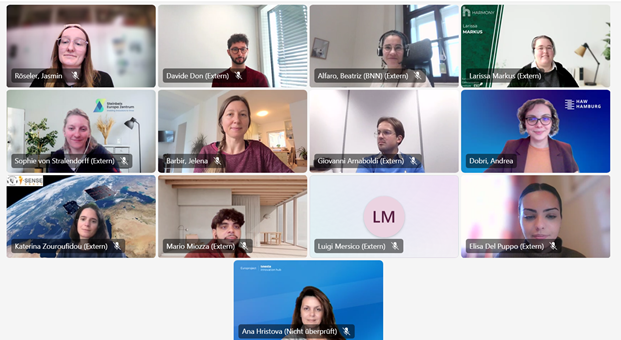
On 2nd December 2025, the CheMatSustain consortium met for the 4th General Assembly Meeting of the project. The meeting was attended by representatives of all 11 project partners, offering a great opportunity to hear from each other and to align further work. The online session was moderated and opened by the project lead manager, Dr. Jelena Barbir (HAW Hamburg), who gave an overview of the general status of the project after the first two years. This was followed by all WP leaders presenting the current status of the work packages, updates since the last meeting six months prior, and potential risks for project completion that were identified.
|
|
|---|
|
Fig.2. The CheMatSustain consortium meeting for the 4th General Assembly. |
|
|---|
|
Overall, the project work is progressing well without major delays. The next round of samples of nanomaterials will be produced and sent out to project partners for testing in the new year. Due to short shelf lives of some of the samples, this process will have to be timed with all participating partners to avoid delays in delivery and testing. In the meantime, sampling and testing of the last round of materials is progressing well and on schedule. Similarly, the QSAR models for human health and ecotoxicity impacts of nanomaterials have been progressing well and are showing first results. In early 2026, a workshop with the CMS partners is scheduled to strengthen the internal collaboration on life cycle assessment of the CNMs. Other highlights from the meeting include the release of the CheMatSustain database, which will make project data publicly available, as well as some successful communication work, such as the recent Collab4Resilience Networking Workshop (see article no.7).
The last hour of the meeting was dedicated to aligning some open points to strengthen the project collaboration for the next chapter. Project partners sought guidance and support within the consortium for points such as identifying relevant policies regarding nanomaterials, or matching with relevant industry partners for some crucial project inputs. Furthermore, to improve coordination and meeting efficiency, a new meeting structure for the new year was decided, maximizing direct feedback and inputs from all partners. Lastly, the partners discussed the alignment of the practical applications to be covered by the project with outcomes and some first prioritization of certain CNMs.
The meeting ended on a cheery note in high spirits, celebrating the overall progress of the project and anticipating a fruitful continuation of the collaboration in the next months.
|
|
|---|
|
3. How Small Polystyrene Beads Help Us Understand Nano- and Micro-Plastics
Katarzyna Ranoszek-Soliwoda and Jaroslaw Grobelny, University of Lodz
|
|
|---|
|
Polystyrene beads are tiny, lightweight particles made from the synthetic polymer polystyrene. Polystyrene itself is produced from the monomer styrene, which, after polymerization, forms a hard, transparent material with low density. Although they may look insignificant, they have a surprisingly wide range of applications in science and industry.
In laboratories, polystyrene microspheres are used in biology and chemistry—as carriers in immunoassays, flow cytometry, and microscopy. Because their surfaces can be easily modified chemically, they can bind proteins, antibodies, or other biological molecules. In everyday life, polystyrene beads are found in expanded polystyrene, commonly known as Styrofoam, which serves as thermal insulation or packaging material. In the cosmetic and pharmaceutical industries, beads of controlled size are used in exfoliating scrubs and in drug delivery systems.
Despite many advantages of polystyrene beads, increasing attention is being paid to the issue of nano- and micro-plastics — tiny plastic particles (fragments) that enter the environment. Nano- and micro-plastics are increasingly being detected almost everywhere — in the oceans, soil, and even in the air and animal body. Although they are almost invisible, their impact on the environment and human health can be enormous. That's why scientists around the world are conducting intensive research on this phenomenon.
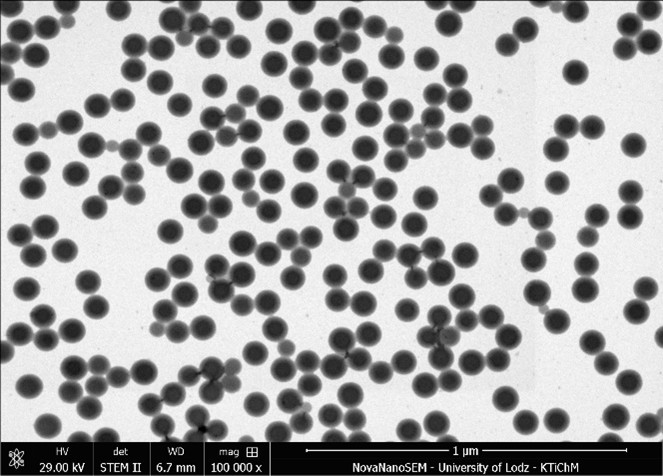
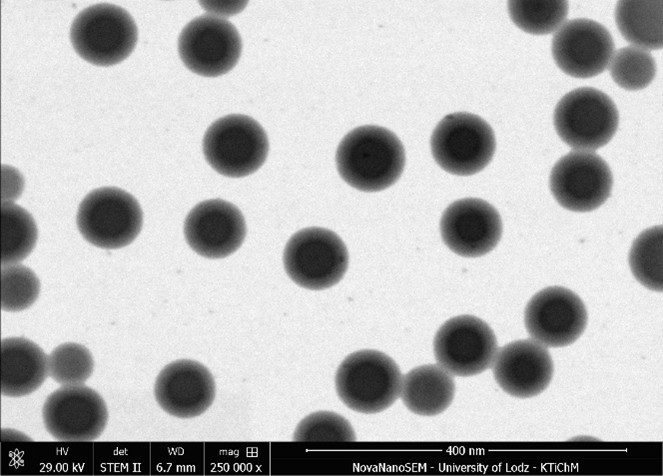
Nano- and micro-plastic research allows us to understand how plastics degrade in the environment and how long they can survive. This research shows that these particles don't disappear but gradually break down into smaller fragments that can penetrate animals and plants. Polystyrene beads (micro- or nano-spheres) are among the most commonly used model materials in microplastic research also in CheMatSustain project. Their uniform size, well-defined shape characterized by University of Lodz (as pictured) make them ideal for controlled laboratory studies. That’s why polystyrene beads are a useful, controlled tool for studying the mechanisms of nano- and micro-plastic action: from toxicity at the organism level, through trophic transfer, to pollutant sorption processes.
|
|
|---|
|
Fig.3. HR-STEM image of polystyrene beads (images performed by ULODZ team - University of Lodz, Poland). |
|
|---|
|
The results of this research have enormous practical significance. Such experiments help assess whether nano- and micro-plastics may be toxic – whether they cause stress in cells, disrupt algae growth, or affect the development of fish. They are helping to shape new regulations regarding the production and disposal of plastics, as well as inspiring innovative solutions such as biodegradable materials and more efficient filtration systems in wastewater treatment plants. While nano- and micro-plastics are a global problem, it is thanks to scientific research that we can better understand their nature and find ways to reduce their presence in our world – before they become an irreversible problem. |
|
|---|
|
4.When Cells Sense Danger: Apoptosis, DNA Damage and the Will to Divide
Małgorzata Siatkowska, Piotr Komorowski, Bogdan Walkowiak, Technical University of Lodz
|
|
|---|
|
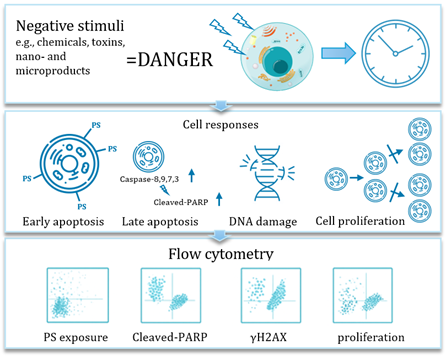
When cells encounter potentially harmful chemicals, toxic agents, or nano- and microproducts, their internal decision-making machinery switches into high alert. In the CheMatSustain project, using flow cytometry we can track how the cells respond to these threats at different stages — from early to late apoptosis, through DNA damage responses, to changes in cell proliferation.
So, what happens first? When cells sense danger, they initially try to fix the problem in several ways. If a substance increases oxidative stress, cells activate their antioxidant systems. If proteins become damaged, the cells produce heat shock proteins (HSPs) and activate the Unfolded Protein Response to stabilize or repair them. They may also boost the expression of genes involved in detoxification.
If the stress continues or becomes too strong, cells can shift into an “energy-saving mode” by slowing down or stopping their cell cycle — which we observe as reduced proliferation (growth and propagation through cell division) in cell culture. But when a harmful agent causes severe damage to the cell membrane, mitochondria or DNA, the signal becomes impossible to ignore. The cell must choose between survival and death. If survival is still possible, it activates the DNA Damage Response to repair what was broken. If not, the cell initiates a programmed, controlled form of self-destruction known as apoptosis.
These processes can be monitored by flow cytometry - a technique that measures physical and biochemical properties of individual cells. Early apoptosis can be detected using markers such as phosphatidylserine (PS) which becomes exposed on the outer leaflet of the cell membrane. Late apoptosis is identified by the presence of cleaved-PARP, a protein fragment produced when apoptotic effectors — caspases — degrade a key component involved in DNA damage repair. Additionally, double-strand breaks in DNA can be monitored using another marker - phosphorylated histone (γH2AX).
Together, these cytometry-based tests provide a detailed picture of how cells sense, process and react to harmful stimuli — offering valuable insight into the safety of emerging chemicals and nano- and micromaterials. By combining markers of apoptosis, DNA damage and proliferation, we can map not only whether a material is harmful, but how it disrupts key cellular pathways. This mechanistic understanding is crucial for designing safer, more sustainable substances and for building predictive models that support responsible innovations. Thanks to well-characterized cellular responses, we can test also whether in-silico predictions align with real biological outcomes, allowing faster and more reliable assessment of the safety of new materials.
|
|
|---|
|
Fig.4. Possible cellular responses to harmful agents.
|
|
|---|
|
|
5. The CheMatSustain Database: A Digital Driver of Sustainable Materials Research
Kamal Khandelwal, Eurskem B.V.
|
|
|---|
|
The CheMatSustain (CMS) Database is a central platform for collecting, organizing, and exploiting research data generated within the project. Experimental results from the Work Packages (WPs) are curated, stored, and made accessible as structured, usable datasets.
The CMS Database enables the systematic storage and visualization of experimental outcomes. It supports further data exploitation, such as developing
in silico (QSAR) models to predict material safety and to assist in risk assessment during the design phase. The curated data also contribute to Life Cycle Assessment (LCA), the Footprint Scorecard (FS), and public dissemination through the CMS Facility — a digital platform tailored for policymakers, industry, and citizens to receive practical project outputs most relevant to them.
The CMS database is built on a PostgreSQL relational database and follows a Docker-based deployment to ensure portability and reproducibility. Role-based access control is implemented, with an administrative back office for user and test management.
The backend, developed with FastAPI (Python), handles data processing and API endpoints. It includes dedicated parsers for various experimental data types, ensuring consistent extraction and transformation workflows.
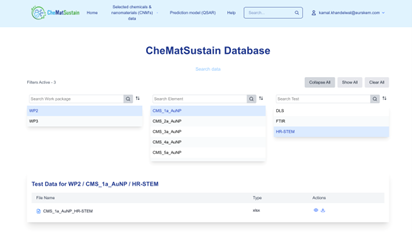
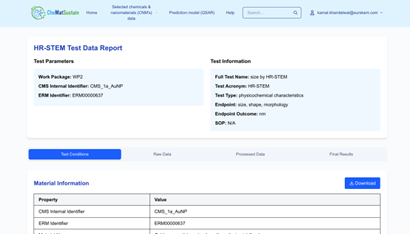
The frontend is built with Next.js and TypeScript, following a component-based architecture. Data visualization uses Recharts, and user authentication is managed through a role-based AuthContext. The interface, styled with Tailwind CSS, provides dedicated data viewers for each experiment, including specialized visualizations and downloadable reports. The figures below illustrate the landing page of the Database.
|
|
|---|
|
Fig.5. Illustration of the CMS Database frontend interface and its main functionalities. |
|
|---|
|
The CMS Database is designed in accordance with the FAIR principles — ensuring data is
Findable, Accessible, Interoperable, and
Reusable. All developed code is open-source and available on GitHub. The database is hosted on an IONOS VPS server located in Germany.
|
|
|---|
|
6. Designing Safer Nanomaterials with the Power of Digital Prediction
Rafael García Meseguer, Enrique Llobet Serra and Ana Ambit Álvarez, ProtoQSAR
|
|
|---|
|
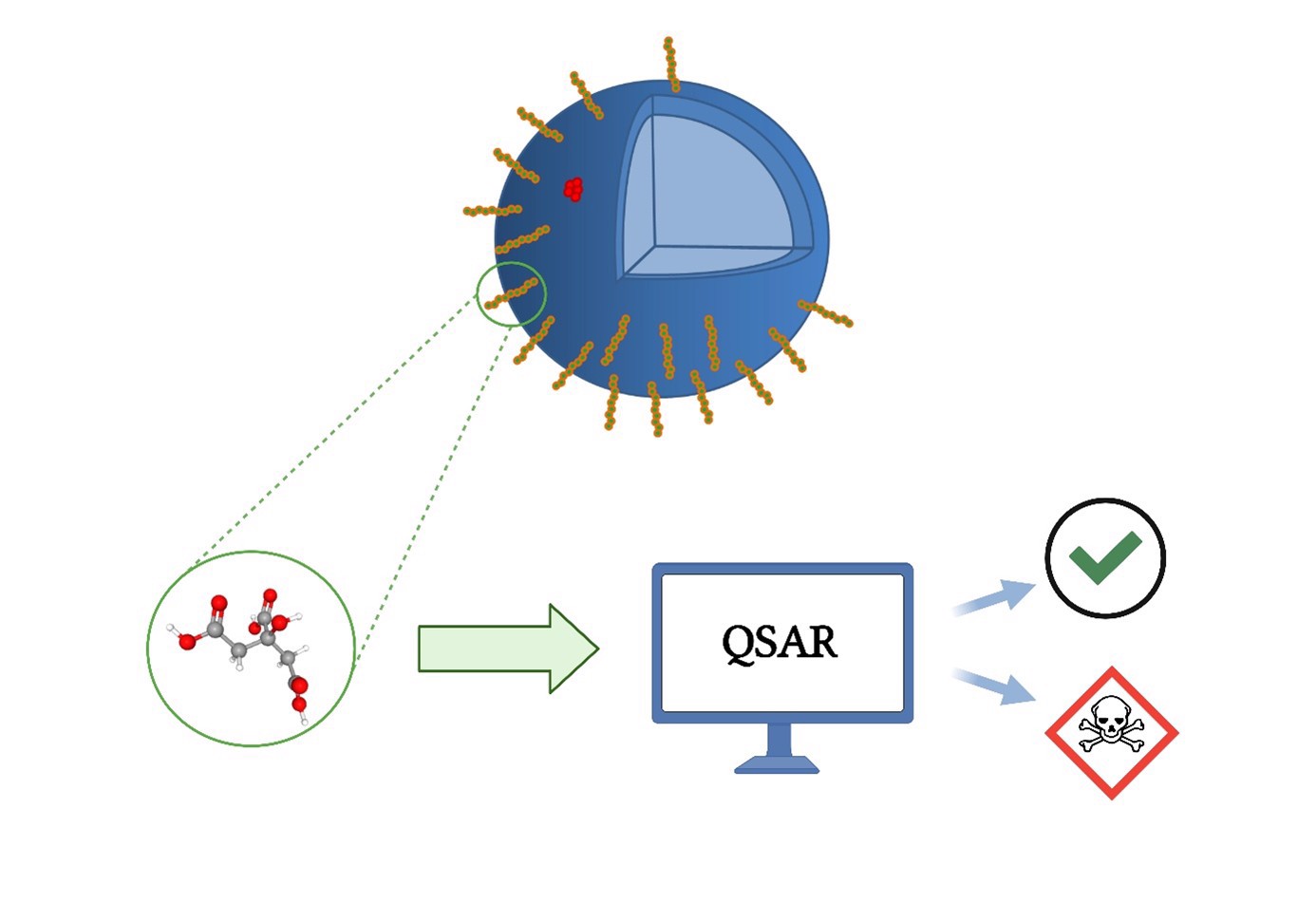
The CheMatSustain project is developing new ways to design safer, more sustainable materials, using computer models to predict risks before experiments are conducted. Deliverable 5.2 explains how researchers at ProtoQSAR developed a set of digital tools to estimate whether small chemical components used in advanced nanomaterials might harm human health or the environment.
These chemicals play an essential role in the structure and performance of these new materials. However, their safety profiles are often incomplete, and laboratory testing can be expensive, slow, and ethically challenging due to animal testing. To address this, the team built
in silico models that use a molecule's structure to predict its behaviour in living cells and aquatic organisms.
To develop these models, researchers first collected experimental data from scientific papers, public chemical databases, and regulatory sources. This information was then cleaned and standardised so that each measurement was comparable and consistent with the complete dataset. These good practices help ensure the reliability of the models trained with the curated data, which learn patterns between the chemical structures and biological effects.
Eight QSAR (Quantitative Structure–Activity Relationship) models were developed, covering human health endpoints, including cytotoxicity, DNA damage, oxidative stress, inflammation, and apoptosis, as well as environmental impacts, including toxicity to algae and small aquatic animals. Even though some datasets were small or varied widely across studies, the models performed well thanks to rigorous validation methods that assess their predictive accuracy on unseen cases.
To complement these predictions, the team also developed SAR (Structure–Activity Relationship) models. Instead of numerical outputs, these identify structural "alerts", chemical fragments associated with harmful effects. These alerts provide clear, human-readable rules that help chemists understand why a molecule may pose a risk and how it might be redesigned.
Altogether, 17 predictive models were produced, which, together, will form a digital framework that supports Safe-and-Sustainable-by-Design (SSbD) principles for the development of new nanomaterials. The models will be integrated into a computational tool and added to the project's central database, helping researchers screen chemicals early in the design process and reduce unnecessary testing. Deliverable 5.2 marks significant progress towards using digital science to create safer nanomaterials from the very beginning.
|
|
|---|
|
Fig.4. Based on the chemical structure of the nanomaterials, the QSAR models can predict potential toxicity. |
|
|---|
|
|
7. Collab4Resilience Brings EU Projects Together for a Fresh
Round of Ideas
Andrea Dobri, Hamburg University of Applied Sciences
|
|
|---|
|
The Collab4Resilience network held its second online networking workshop on 25 November 2025, bringing together 17 participants from nine different EU-funded projects. The session built on the first kick-off meeting earlier this year and focused on helping projects work more closely, improving the visibility and outreach of the projects.
The Hamburg University of Applied Sciences, as leader of the CheMatSustain project, opened the meeting with a short look back at what the network has achieved so far and how CheMatSustain is progressing. The University of Bologna followed with a short presentation on the CheMatSustain Facility, the project’s main output, launched in 2025.
One of the highlights was a short “What We’re Proud Of” round, where each project shared recent achievements. Participants then joined several co-creative activities, including an interactive Miro session to collect ideas on future communication efforts—from social media to joint events—and a knowledge-sharing exercise to identify concrete opportunities for collaboration.
The meeting wrapped up with a look ahead to 2026, outlining the next practical steps to improve communication, share resources, and support each other’s work.
This networking event showed how much interest there is in continuing to grow the community. The network remains open to more Horizon Europe projects that want to join and contribute.
|
|
|---|
|
8. Spotlight Partnership
Andrea Dobri, Hamburg University of Applied Sciences
|
|
|---|
|
One of the key outcomes of the Collab4Resilience initiative is fostering collaboration through project newsletters.
In this issue, we’re excited to introduce the new “Spotlight Partnership” section, which features member projects from our working group and highlights their contributions to our shared goals. |
|
|---|
|
Explore PLANETS’ Latest Materials: Training & SSbD Wordbook
Beatriz Alfaro Serrano , BioNanoNet
|
|
|---|
|
The EU-funded project PLANETS aims to demonstrate the applicability of the SSbD Framework while technically developing alternatives for 3 of the most important classes of molecules in chemical industries (plasticizers, flame retardants and surfactants) at TRL 6 and their incorporation into broadly available consumer goods at TRL 7. The new molecules and products will be significantly safer for workers and consumers and will have considerably lower environmental impact, while ensuring economic viability and social awareness throughout the 3 value chains.
|
|
|---|
|
PLANETS is very active in organising internal trainings and adapting the materials for external users!
In their publicly available materials, you will find:
- Safe-and-Sustainable-by-Design (SSbD) scoping: SSbD policy background, basics, actions of scoping, and the PLANETS SSbD workflow
- SSbD Tier 1 assessment: theory, application and adaptationConducting a
- SSbD Tier 2 assessment using QSAR modelling
- Introduction to FAIR data & models, and Digital Product Passport (DPP)Introduction to
- Life Cycle Sustainability Assessment (LCA)
|
|
|
|
|
Furthermore, PLANETS has created a carefully curated collection of essential terms and their meanings to facilitate the understanding and deepen the use of terms in the context of the PLANETS SSbD approach. It aims to share the SSbD vocabulary with case studies and between SSbD experts. It contains more than 80 terms dealing with SSbD, Safety, Hazard, Exposure, Environment, Economic and Social aspects that could be indicators, tools, or methods.
|
|
|---|
|
Cluster organisations supporting innovation in SMEs: BRIDGESMEs project launches open series of Peer Review Meetings
Elisa Del Puppo, Iniziativa
|
|
|---|
|
Are you a cluster organisation working to support SMEs in the digital and green transition? Then, join the BRIDGESMEs Peer Review Meetings!
BRIDGESMEs is a Horizon Europe-funded project that aims to foster the creation of strategic partnerships between manufacturing enterprises and tech-savvy companies. The project helps businesses to rethink their business models and operations, thus fostering resilience, promoting sustainability and enhancing a human-centric approach. Together with SMEs, we are strengthening innovation ecosystems and unlocking new opportunities towards Industry 5.0.
Within this project, a series of peer-review meetings are planned to be held. These events aim to promote inter-cluster cooperation across and within ecosystems, to exchange experiences and insights, as well as to identify and co-develop evidence-based policy recommendations. The goal is to establish the basis for a long-term cooperation platform that will extend beyond the project.
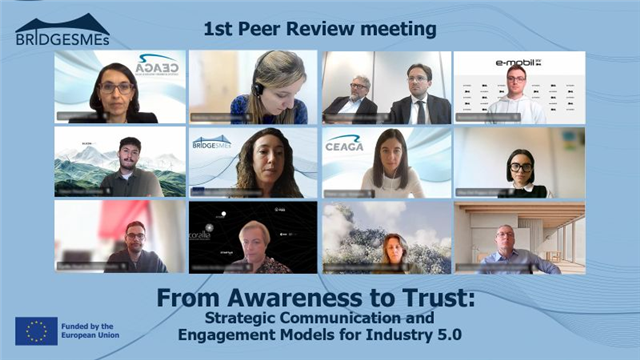
In October 2025, BRIDGESMEs held its 1st Peer Review Meeting ‘From Awareness to Trust: Strategic Communication and Engagement Models for Industry5.0’, bringing together 30 cluster professionals from five European industrial ecosystems. The session focused on how strategic communication and engagement models can help turn awareness of Industry 5.0 into concrete action and trust among SMEs. Participants shared experiences, collaboration models and practical examples from the Mobility, Transport & Automotive, Electronics, Aerospace & Defence, Tourism and Cultural & Creative Industries ecosystems.
Two more peer-review meetings will be held in the first months of 2026, while an in-person Workshop ‘Fostering Ecosystems Readiness: Local Activation and Cluster-Led Innovation’ will take place in Naples in December 2025.
Should you be interested in shaping future innovation and share your insights, don’t hesitate to reach out to the BRIDGESMEs consortium: info@bridgesmes.eu.
|
|
|---|
|
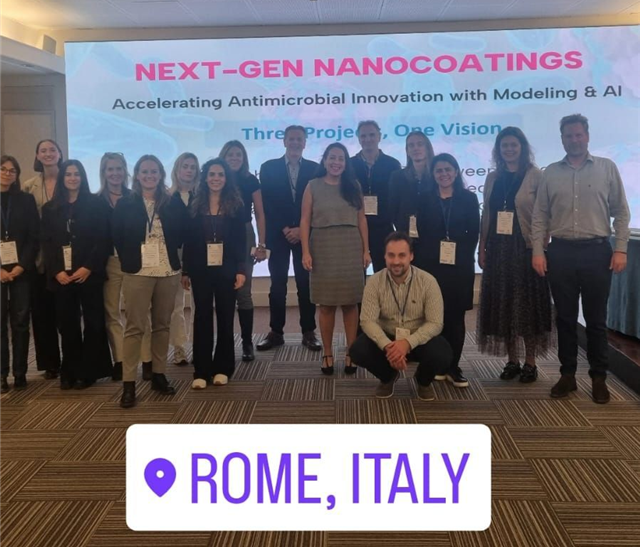
NEXT-GEN NANOCOATINGS EU projects Workshop Showcases Breakthroughs in Antimicrobial Innovation at SMS 2025 conference
Ana Hristova, Europroject
|
|
|---|
|
On 30 October 2025, three EU-funded projects - RELIANCE, NOVA, and NANOBLOC - joined forces to host the Next-Gen Nanocoatings workshop during the Smart Materials and Surfaces (SMS) Conference in Rome. The event brought together leading researchers, industry experts, and materials science professionals to explore the future of antimicrobial surface technologies.
The workshop highlighted the urgent need for innovative nanocoating solutions to tackle global health and sustainability challenges.
The morning spotlighted the three flagship projects:
- RELIANCE presented its smart-response bio-based nanocoatings for healthier environments.
- NOVA introduced novel strategies for antimicrobial surface design.
- NANOBLOC showcased real-world applications of protective nanocoatings.
Afternoon sessions focused on computational modeling, AI, and data management, with talks demonstrating how machine learning accelerates material discovery. A dedicated segment on Research Data Management reinforced the importance of FAIR principles for scaling innovation.
Safety and sustainability were central themes, with colleagues from the University of Turin and Tekniker addressing environmental and toxicological considerations. Industry perspectives from Arcelik and Molecular Plasma Group provided insights into commercialization pathways.
The event underscored the global relevance of antimicrobial nanocoatings - from safer hospitals to cleaner public spaces to less antimicrobial resistance - while fostering collaboration across research, regulation and industry.
|
|
|---|
|
9. Event Announcement: CheMatSustain at ANTHOS'26
|
|
|---|
|
In 2026, the CheMatSustain project will be back with new and exciting project outcomes, joining various events and conferences to showcase our work and to connect with stakeholders and other experts in the field of (nano)materials and chemicals. To always stay up-to-date on any upcoming outputs and opportunities to connect, follow us on LinkedIn.
ANTHOS'26
Advanced (Nano)Materials and Technologies: From Needs to Solutions!
9 - 11 March 2026
Vienna, Austria
Safe your spot and register now!
|
|
|---|
|
Thank you for reading!
We hope that you have enjoyed the fourth edition of the newsletters and that you follow our project journey!
If you have not already, please subscribe to our newsletter!
|
|
|---|
|
Take a look at our upcoming events on our website!
|
|
|---|
|
Sincerely yours,
The CheMatSustain Partners
|
|
|---|
|
| |
|
|
|